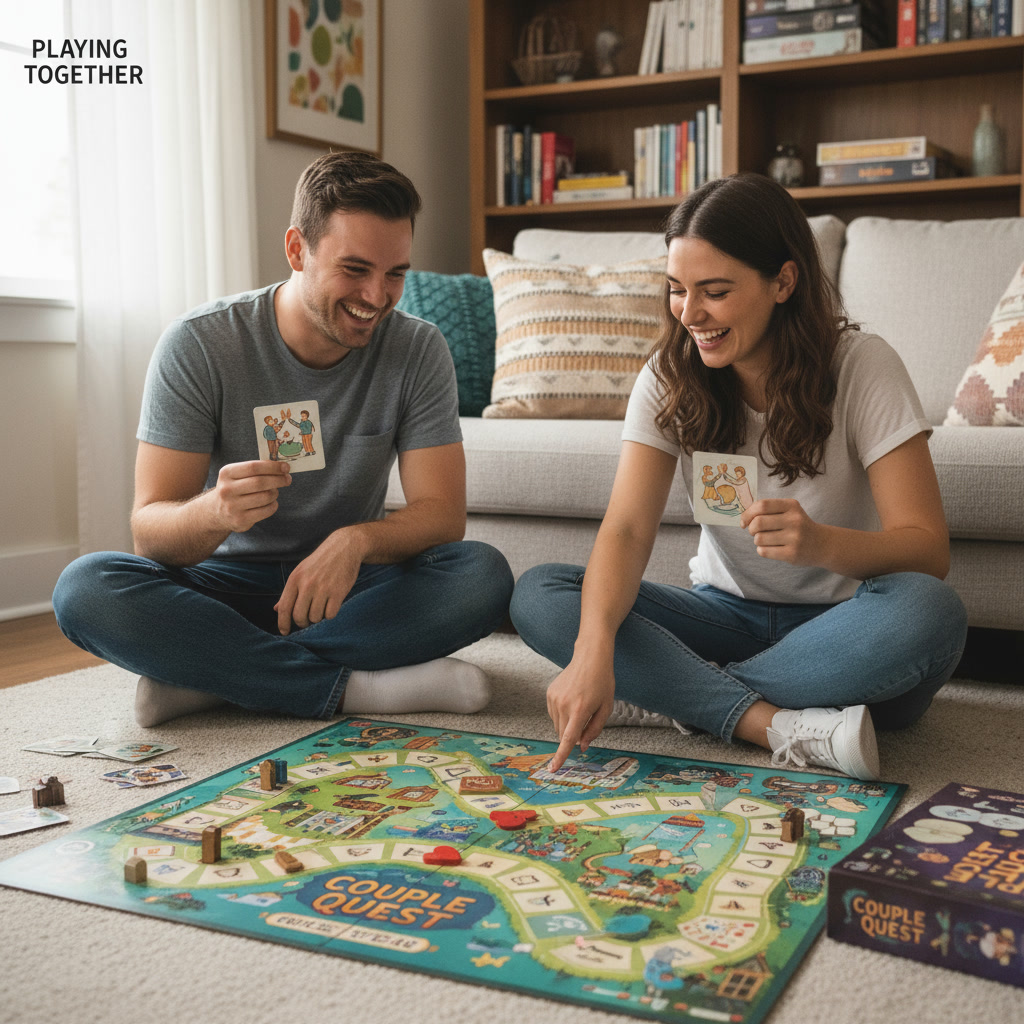
In an era where digital screens often mediate human connection, cooperative gaming emerges as an unexpected arena for nurturing intimate bonds. Games like Animal Crossing: New Horizons and Stardew Valley offer more than just escapism,they provide structured frameworks for couples to practice empathy, resolve conflicts, and celebrate shared victories. This article explores how these virtual worlds mirror real-life relationship dynamics, transforming controller inputs into profound emotional resonance.
The Art of Listening: Turning Game Dialogue into Heartfelt Conversations
When Tom Nook assigns tasks on your partner’s island in Animal Crossing , success depends entirely on clear communication. One player might prioritize fishing while another focuses on gardening,but without verbalizing priorities, chaos reigns. Consider Maya and Liam, who discovered their mismatched approaches during a late-night session: “I kept waiting for him to stock the market stall,” Maya admitted, “while he assumed I’d handle villager requests.” Their breakthrough came when they adopted a nightly debrief ritual, mapping out roles using the game’s calendar feature. By translating in-game negotiation (“Should we invest in public works first?”) to real-world discussions (“Can we split household chores similarly?”), they transformed passive resentment into active collaboration.
This dynamic echoes psychological research on active listening, where paraphrasing others’ perspectives builds trust. In Stardew Valley , multiplayer mode requires constant updates about crop rotations or mine levels,skills directly transferable to navigating sensitive topics like finances or parenting styles. As therapist Dr. Elena Marquez observes, “Game environments lower defenses; people feel safer expressing uncertainty when consequences are fictional.”

Resource Management: Balancing Autonomy and Interdependence
Both titles present有限的 resources demanding strategic allocation,whether it’s limited bells in Animal Crossing or gold in Stardew Valley . Successful players develop complementary strengths: one partners thrives under pressure (rushing orders before deadlines), while another excels at long-term planning (planting fruit trees for future profits). These patterns reflect John Gottman’s principle of ‘bids for connection’,small gestures that either strengthen or erode relationships based on responsiveness.
Take Carlos and Rajesh, who initially clashed over spending habits in Stardew Valley . Carlos favored risky investments in livestock, whereas Rajesh preferred steady income from kelp farming. After repeated failures, they created a hybrid strategy: dedicating 70% of funds to reliable crops while setting aside 30% for experimental ventures. “It taught us compromise isn’t surrender,” Carlos noted. “Now we apply that ratio to our vacation budget!” Such experiments reveal how gamified decision-making fosters flexibility,essential for maintaining harmony beyond screen time.

Celebrating Small Wins: Dopamine Hits That Fuel Lasting Affection
Neuroscience confirms that completing challenges together releases oxytocin,the ‘love hormone’,creating positive associations between partners. In Animal Crossing , decorating a joint museum feels monumental; in Stardew Valley , restoring the Community Center becomes a metaphor for revitalizing neglected aspects of life. Couples report heightened affection after achieving milestones, partly due to dopamine reinforcement but also because games validate effort visibly.
Consider Lena and Marcus, whose weekly date night evolved into marathon sessions chasing rare bugs. “We’d stay up till midnight catching butterflies,” Lena laughed, “then realize we hadn’t argued all week!” Their experience aligns with studies showing shared activities increase relationship satisfaction more than parallel hobbies. Crucially, both games reward patience: waiting days for a perfect weather pattern teaches delayed gratification applicable to resolving real disputes.

Ultimately, cooperative gaming serves as a low-stakes training ground for relationship skills. Just as chef Gordon Ramsay refines dishes through repetition, couples hone communication muscles by navigating virtual crises. Next time you pick up a controller beside your partner, remember: every successfully irrigated field or decorated room is a brick laid in the foundation of your connection.
Your Turn: What game mechanics have helped YOU build closer relationships? Share your stories below!